


Although we’d like to think that college is a safe haven from sexual violence, the National Institute of Justice’s 2005-2007 Campus Sexual Assault Study of almost 7,000 undergraduate students indicates that one in five women and six percent of men experienced attempted or completed sexual assault during college.
The risk of sexual violence rises during the first six to eight weeks of the semester. Dr. Heather Horton, director of the Wellness Resource Center and coordinator of sexual assault response at Colorado College in Colorado Springs, says that new students are more vulnerable than others. “They don’t yet know how the social system works and aren’t aware of the resources, either. They are the low people on the totem pole and it creates some power dynamics,” she explains.
According to Dr. Horton, sexual violence affects everyone. “Men get victimized in addition to women, [and] men also have mothers and sisters and friends that may be affected by these issues,” she explains. Perpetrators can be male or female, and sexual assaults happen in heterosexual and same-gender relationships.
Most college sexual violence occurs when one or both people are intoxicated, and students are usually assaulted by people they know and trust-not strangers.
There are effective violence prevention strategies, and it’s essential that both men and women get involved.
Jarrod Chin, a director of the Mentors in Violence Prevention (MVP) program at Northeastern University in Boston, Massachusetts, explains, “A lot of discussions around sexual assault are about women protecting themselves when they get to college: Cover your drink, use a buddy system when you go home, don’t dress too provocatively, etc. But at MVP, we put the onus on men holding other men accountable for their behavior. MVP tries to move the conversation away from victim blaming and focuses on how men can be allies to women, not adversaries.”
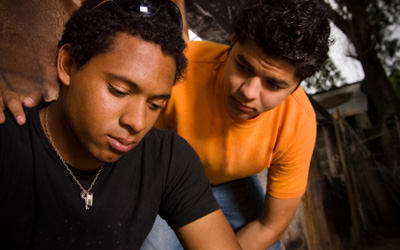
So, what would you do to prevent sexual violence? Here are three scenarios to help you identify when something doesn’t look or feel right and act on the instinct to stop it.
#1: A Big Party
Your friend Nicole is talking with a classmate, Brian. They’re flirting and Nicole is intoxicated, but Brian doesn’t seem to be. You hear Brian ask Nicole to take a walk with him. It’s late and hardly anyone is out.
What’s the problem?
Nicole can’t make clear decisions while intoxicated, and her classmate could easily persuade or overpower her into doing something against her will.
What can you do?
#2: Hanging Out
You’re hanging out with a group of friends when you notice one of the guys cornering your friend Jill in the kitchen. She looks uncomfortable.
What’s the problem?
The guy may just be misreading social queues, or may be purposefully isolating Jill from the group’s watchful eye.
What can you do?
Distracting one or both people is a good strategy in this kind of situation.

#3: A Potential Hookup
You meet Pat at a party and drink a few beers. You start hooking up, but Pat pushes you away.
What’s the problem?
Just because someone doesn’t say “no” it doesn’t mean there’s consent. People use subtle cues or don’t do anything, maybe because they feel embarrassed, unsure, want to be liked, or are intoxicated.
What can you do?
A recent Student Health 101 survey found that more than 90 percent of respondents would intervene if they saw a situation that involved sexual pressure or potential sexual violence. Amy W.*, a senior at Fitchburg State University in Massachusetts, says, “I’ve stepped in many times when [people aren’t] acting right or pressuring. I say that I don’t like or tolerate that behavior.” Staff at your school are a great resource. If your safety is a concern, get help from a security officer or other trained professional. You can also call 9-1-1.
As a student, you have the power to prevent violence. Dr. Horton says, “Whatever the sexual culture is like on [your] campus, it doesn’t mean it has to stay that way. Think about your own ability to make cultural change.”
* Name changed for privacy.
Emily is a writer and editor specializing in health and wellness. She is a graduate of American University.
If you or someone you know has been affected by sexual violence, there are many ways to get support. Keep in mind that some people are required by law to report sexual assaults. Confidential support is available from professional counselors and health care providers, clergy, and some other staff. If you have a question about confidentiality, don’t hesitate to ask before talking about your experience.
You can also talk with someone else you trust, like a faculty member, advisor, or coach.
If you would like to talk with someone not associated with your school, the Rape, Abuse, & Incest National Network (RAINN) offers the following:
National Sexual Assault Hotline
800-656-HOPE (4673)
https://ohl.rainn.org/online
Free and confidential services are available 24/7.
According to the U.S. Department of Education’s Office for Civil Rights:
“Sexual violence refers to physical sexual acts perpetrated against a person’s will or where a person is incapable of giving consent due to the victim’s use of drugs or alcohol. An individual also may be unable to give consent due to an intellectual or other disability. A number of different acts fall into the category of sexual violence, including rape, sexual assault, sexual battery, and sexual coercion.”
The MVP program, started almost twenty years ago, is based on encouraging men and women to engage in bystander intervention for gender-based violence against women.
This is in contrast to other approaches that have seen men solely as perpetrators and women as only victims or survivors of violence.
MVP uses former collegiate and professional athletes as trainers to empower men and women to intervene when they witness gender-based violence. On many campuses, chapters of MVP facilitate men’s student leadership in violence prevention.
Samantha S.*, a junior at Stonehill College in Easton, Massachusetts, stopped an intoxicated team mate from heading to an off-campus dorm with someone she didn’t know. “I went up to the guy and told him my friend wasn’t going with him. He told me to stay out of it but I told him to leave. I felt like I was definitely doing the right thing. I was proud of myself for helping my friend,” she says.
The bottom line: It’s okay to be firm if you’re met with resistance.
* Name changed for privacy.
Jake R.*, a senior at Colorado Mesa University in Grand Junction, used a distraction technique. He says, “A guy was trying to persuade my friend to go ‘check out his guitar’ in his room. [Then he said], ‘Have you sat on my bed? I swear it’s the best you’ve ever been on.’ I walked in and said, ‘Our roommate is in trouble a couple streets away and is crying.’ That got [my friend] out of his room and somewhere safer.”
The bottom line: Distraction can be a good strategy.
* Name changed for privacy.
Help spread awareness and learn more about sexual violence prevention strategies by joining (or starting!) a program on your campus. Some common initiatives include:





